
Design Engineering
Friction
Definition – Release is a property of surface tension measured by the wetting angle at which a drop of water slides on a coated surface. The larger the wetting angle, the greater the release property of a coating.
Release and Coatings – In many applications, dry film lubricants offer excellent release properties. These release agents improve the effectiveness through multiple cycles of molding, keep tools clean longer, and provide for greater productivity.
The following is a graphical example of Release and Non-stick properties :
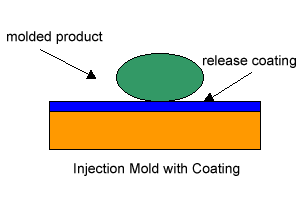
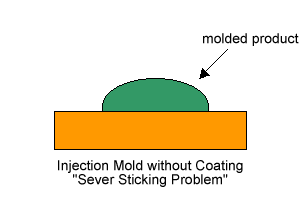
Examples: Carburetor shafts, choke plungers, butterfly spindles, conveyor components, instrument probes, and fluid injectors are all excellent candidates for release coatings due to the possibility of jamming from buildup of dirt, ice, soot, scale or food.
Application Examples
The following examples are of components with release problems and the engineered coating services that solved the problems.
Component / Part
Problems Solved
Industry
Calipers
Release, Friction, Wear
Automotive
Cavity Blocks, Cone Rings & Pins
Release
Automotive
Conveyor Belts
Release, Wear
Industrial
Gaskets for Automotive Cylinders
Friction, Lubrication, Release, Corrosion
Automotive
Mold Cavities
Release
Industrial
Parts Molds for Helicopter blades
Release
Military
Questions
Please see our identify problems section, for a quick response to any type of release and/or other questions that you have on how Everlube Products’ coatings can help solve your design challenges.